



Blind rivets is a common connection element commonly used to join metals, plastics, and other materials. They work by inserting a nail into the hole and then applying force on the other side using a nail gun or tool to extend the tail of the nail, thereby holding two or more pieces together. The following is the working principle of several common nails:
1. POP Blind Rivet
The working principle of the POP blind rivet can be summarized as clamping the materials while the head expands, achieving the connection and fixation. This type of connection is suitable for situations where materials need to be joined, but the backside of the materials cannot be accessed after the connection, as the operation of the open-end rivet is carried out from one side. This advantage makes open-end rivets suitable for specific applications, such as compact spaces or situations where access to the reverse side of the materials is restricted.

2. Hem-fix blind rivet
Use a tool (usually a wrench or a pneumatic tool) to tighten each end of the Hem-fix blind rivet. During the tightening process, the middle part of the Hem-fix blind rivet will gradually widen, clamping the connected material, with the tightening of the Hem-fix blind rivet, its two sides of the material will be clamped together to form a strong connection. Due to the design of the Hem-fix blind rivet, it has advantages in connecting metals, plastics, rubber and other materials, especially for situations that require strong connection and fixing. This connection is suitable for a variety of applications, including manufacturing, construction, machine building and other fields

3.Mono-Grip Blind Rivet
Use a specialized rivet gun or tool, often pneumatic, to insert the unexpanded portion of the rivet into the hole. Apply force using the tool to expand the tail end of the rivet, creating a larger diameter head on the opposite side of the material. This head expansion generates a clamping force that secures the connected materials together. Once the head is expanded, the rivet’s tail end locks into place, preventing the rivet from pulling back through the hole.
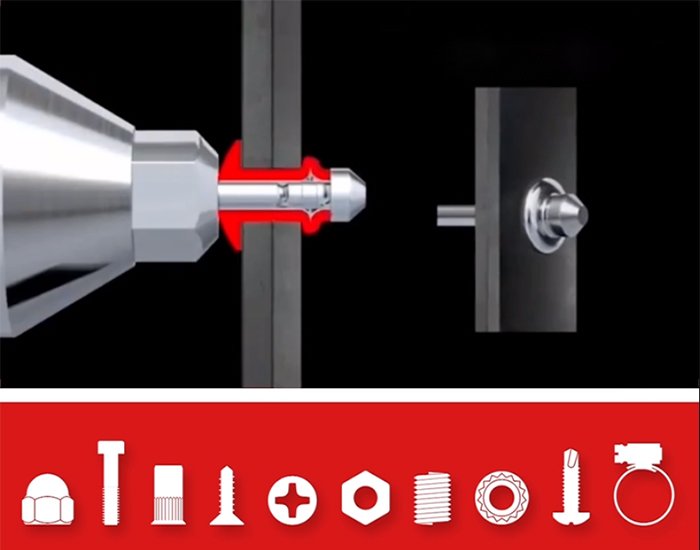
4.Multi-Grip Rivets
Using a rivet gun or other suitable tool, squeeze the tail of the multi-grip rivet, forming a head and tail on either side of the components.During the squeezing process, the tail of the multi-grip rivet gradually expands, creating a connection that adapts to the different thicknesses of the components. This design allows the rivet to accommodate varying material thicknesses while providing a secure connection.Once the tail of the rivet is fully expanded, it is tightly secured between the components, forming a robust connection.
the working principle of multi-grip rivets involves accommodating different material thicknesses by expanding the tail during the riveting process, resulting in a secure connection. This design makes multi-grip rivets particularly useful for joining materials of different thicknesses or in assembly processes where adaptability to variations is required.
