



In the hardware and fasteners industry, copper screws are highly regarded for their versatility, maintainability, and exceptional performance. This article delves into various aspects of copper screws, including their historical background, market prospects, features, applications, advantages, manufacturing processes, quality standards, comparisons with other materials, innovative applications, and the different types of copper used.
Historical Background
Copper screws have a rich history as fasteners. The earliest threaded structures date back to the 4th century BC, and modern screw and nut designs trace their origins to the 18th century. Copper’s selection as a screw material is rooted in its excellent conductivity and heat transfer properties, as well as its high resistance to corrosion, making it an ideal choice for electrical, electronic, and other high-demand applications.
Market Prospects
Copper screws have a broad market outlook, driven primarily by the following factors:
1. Growth in Electronics and Electrical Engineering
With the continuous development and widespread use of electronic and electrical equipment, the demand for high-performance, reliable connection solutions is steadily increasing. Copper screws have promising applications in these fields, including communication equipment, electronic control systems, and electric vehicles.
2. Expansion of the Renewable Energy Industry
The expansion of renewable energy sectors such as solar and wind power is driving the demand for high-quality fasteners. Copper screws play a crucial role in the manufacture of solar panels and wind turbines.
3. High-Performance Computing and Data Centers
Data centers and high-performance computing demand efficient heat dissipation and electrical connections. Copper screws are instrumental in ensuring the stable operation of equipment in these sectors.
4. Customization Options and Innovative Solutions
Various customized options for copper screws are available in the market to meet specific project requirements. This customization capability offers flexibility across industries, making copper screws an ideal tool for addressing a wide range of challenges.

Features and Advantages
Copper screws possess features and advantages that set them apart in various applications:
1. Excellent Conductivity and Heat Transfer
Copper is renowned for its superior conductivity and heat transfer properties. This makes copper screws extremely useful in electronic and electrical applications, ensuring efficient transmission of electrical signals and aiding in heat dissipation to maintain equipment at stable temperatures.
2. Corrosion Resistance
Copper screws exhibit high resistance to corrosion, especially in high humidity or corrosive environments. This characteristic makes them durable fasteners suitable for long-term use without frequent replacements.
3. Maintainability
Copper screws are easy to install and remove, reducing maintenance costs and downtime. They can be replaced easily without the need to replace entire components or structures.
4. Manufacturing Processes and Quality Standards
The manufacturing process of copper screws includes material selection, cold heading, heat treatment, and surface treatment, among other steps. They must meet strict quality standards such as ISO 9001 and ASTM B187 to ensure product quality and performance.
Applications and Suitable Industries
Copper screws find extensive use in various industries, including but not limited to:
1. Electronics and Electrical Engineering
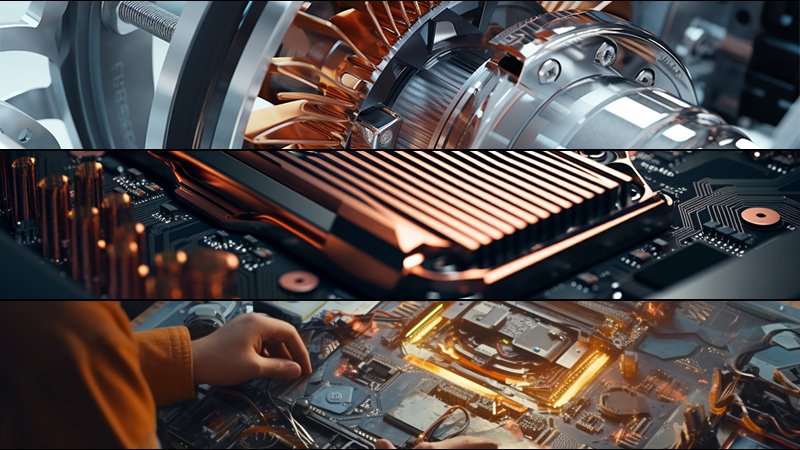
In circuit boards and electronic devices, copper screws are used to connect and support components, ensuring reliable electrical connections.
2. Power Transmission
Copper screws are used in power transmission lines and transformers to optimize energy transfer and reduce energy losses.
3. Automotive Industry
Copper screws provide high-performance solutions for automotive engines, transmission systems, and electrical components.
4. Solar and Wind Energy Sectors
In the manufacture of solar panels and wind turbines, copper screws are used to connect and support critical components.
5. Refrigeration and Air Conditioning Systems
Copper screws are used in cooling systems for assembling radiators and compressors, ensuring efficient system operation.
Comparisons with Other Materials
Comparing copper screws with other common fastener materials:
Compared to Stainless Steel Screws
- Advantages of Copper Screws: Superior conductivity and heat transfer, corrosion resistance, malleability.
- Advantages of Stainless Steel Screws: Higher tensile strength, corrosion resistance, adaptability to various environments.
Compared to Iron Screws
- Advantages of Copper Screws: Corrosion resistance, conductivity, malleability.
- Advantages of Iron Screws: Tensile strength, cost-effectiveness, various types.
Compared to Aluminum Screws
- Advantages of Copper Screws: Corrosion resistance, conductivity, heat transfer.
- Advantages of Aluminum Screws: Lightweight, tensile strength, cost-effectiveness.

Different Types of Copper
Copper screws can be made from various types of copper, including:
1. Brass (Yellow Copper)
Brass is a copper alloy known for its distinctive gold-like appearance. It offers a balance of strength, corrosion resistance, and machinability, making it suitable for decorative applications and electronics.
2. Red Copper
Red copper, also known as pure copper, is prized for its exceptional electrical conductivity and corrosion resistance. It is commonly used in electrical wiring and electronics.
3. Phosphor Bronze (Green Copper)
Phosphor bronze is an alloy of copper, tin, and phosphorus. It combines the strength of bronze with the corrosion resistance of copper, making it ideal for applications requiring durability and resistance to harsh environments.
Innovative Applications
Copper screws not only excel in traditional applications but also demonstrate potential in emerging fields:
- Electric Vehicles: Copper screws play a vital role in battery components and electronic control systems, contributing to improved battery performance and vehicle efficiency.
- Solar Industry: In the manufacture of solar panels, copper screws are used to connect cells and wiring, ensuring efficient energy transmission.
- High-Performance Computing: Copper screws are employed to secure heatsinks and fans, helping maintain stable equipment temperatures to meet high-performance computing demands.
- 3D Printing: Copper screws are expected to expand their application in 3D printing technology, enabling the production of more complex structures and components.
Conclusion
copper screws are a versatile, maintainable, and reliable fastening solution suitable for various industries and applications. Their outstanding features, conductivity, heat transfer, and corrosion resistance make them the preferred choice for many engineering projects. Choosing the right fastener material depends on specific project requirements, and copper screws provide high-performance solutions for numerous projects. If you have any further questions or need more information about copper screws or any other aspect, please feel free to contact us. We are committed to providing support to meet your needs.