



Leather rivets are a critical component in many leatherworking projects, from fashion accessories to sturdy bags and belts. However, with various materials available—brass, copper, and stainless steel—choosing the right rivet for your project can be a daunting task. Each material offers unique advantages and disadvantages, making it essential to understand their properties to make an informed decision. This article will compare brass, copper, and stainless steel rivets, helping you determine which material is best suited for your leatherworking needs.
Brass Leather Rivets
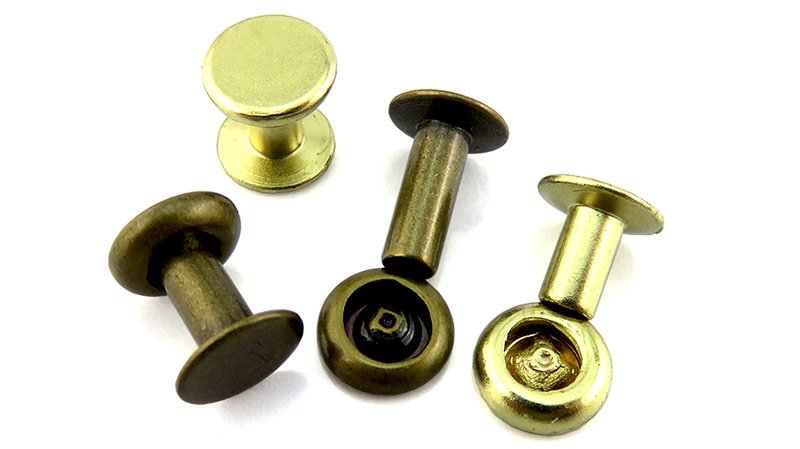
Brass is one of the most popular materials for leather rivets, known for its aesthetic appeal and durability.
- Appearance: Brass rivets have a warm, golden hue that adds a touch of elegance to any leather piece. Over time, brass develops a patina, giving the leatherwork a vintage and antique look, which is highly desirable in certain designs.
- Durability: Brass is a strong material that resists corrosion and wear, making it ideal for items that require both functionality and aesthetics. However, it is softer than stainless steel, meaning it may deform under heavy stress or repeated use.
- Cost: Brass rivets are generally more affordable than copper and stainless steel options, making them a cost-effective choice for most projects.
- Best Uses: Brass rivets are perfect for fashion accessories, such as belts, bags, and wallets, where appearance is a key consideration. They are also suitable for projects that don’t require extreme durability or heavy load-bearing.
Copper Leather Rivets
Copper rivets are favored for their strength and the rich color they bring to leatherwork.
- Appearance: Copper rivets start with a reddish hue that darkens and develops a unique patina over time, similar to brass but with a deeper, more rustic appearance. This makes them an excellent choice for projects that aim for a rugged, handcrafted look.
- Durability: Copper is slightly more robust than brass, providing excellent resistance to corrosion and wear. This makes copper rivets suitable for projects that need a balance between aesthetics and durability.
- Cost: Copper rivets are typically more expensive than brass but still more affordable than stainless steel. They offer a good middle ground for those seeking durability without breaking the bank.
- Best Uses: Copper rivets are ideal for outdoor gear, workwear, and items that will undergo frequent handling and exposure to the elements. Their strength and aesthetic appeal make them versatile for various leather projects.
Stainless Steel Leather Rivets
Stainless steel rivets are known for their unmatched durability and resistance to harsh conditions.
- Appearance: Stainless steel rivets have a sleek, silver appearance that doesn’t tarnish or change color over time. While they lack the warm tones of brass and copper, their modern, clean look is appealing in many contemporary designs.
- Durability: Stainless steel is the most durable of the three materials, offering superior resistance to corrosion, deformation, and wear. These rivets can withstand heavy loads and harsh environmental conditions, making them the best choice for high-stress applications.
- Cost: Stainless steel rivets are usually the most expensive option due to their high durability and material cost. However, the investment is worthwhile for projects where longevity and strength are paramount.
- Best Uses: Stainless steel rivets are perfect for industrial applications, heavy-duty leather goods, and items exposed to moisture or rough conditions, such as outdoor gear, saddlery, and motorcycle accessories.
Conclusion
Choosing the right leather rivet material—whether brass, copper, or stainless steel—depends on the specific needs of your project. Brass rivets offer a classic look at an affordable price, making them great for fashion accessories. Copper rivets provide a rustic charm with added strength, suitable for rugged and outdoor items. Stainless steel rivets, while more expensive, deliver unmatched durability and are ideal for heavy-duty or industrial uses. By understanding the characteristics of each material, you can select the best rivet to ensure both the beauty and longevity of your leatherwork.