


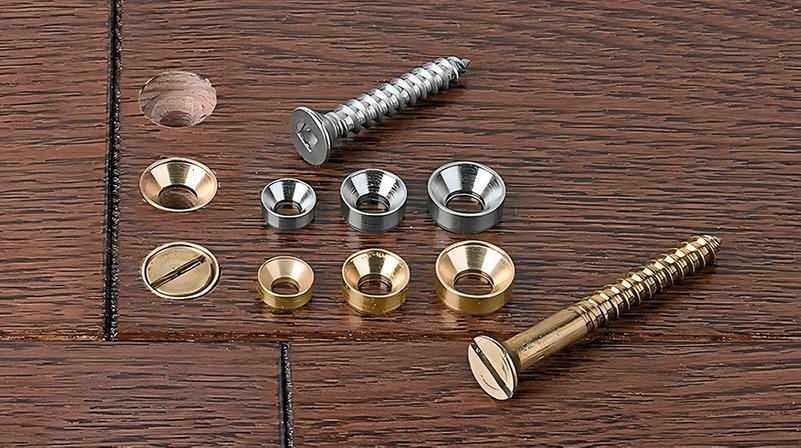
In the field of construction engineering, every component plays a crucial role in ensuring the stability and durability of structures. Countersunk washers, although seemingly small and insignificant, have emerged as important elements with both innovative applications and unique challenges.
I. Introduction to Countersunk Washers
Countersunk washers are designed with a specific shape that allows them to fit flush with the surface when used with countersunk screws or bolts. This design feature not only provides a sleek and seamless appearance but also offers several practical advantages. They help distribute the load more evenly, reducing stress on the fasteners and the materials being joined. In construction, where strength and reliability are of utmost importance, these washers can make a significant difference.
II. Innovative Applications in Construction Engineering
-
Facade Systems
In modern architecture, facade systems often require a smooth and aesthetically pleasing finish. Countersunk washers are used in the installation of curtain walls and cladding systems to ensure a flush connection between the panels and the supporting structure. This not only enhances the visual appeal but also improves the weather resistance and insulation properties of the facade. -
Steel Structures
In the construction of steel buildings and bridges, countersunk washers are employed to secure connections between beams, columns, and other structural elements. Their use helps to prevent stress concentrations and fatigue failures, ensuring the long-term stability of the structure. Additionally, they can be used in combination with high-strength bolts to provide a reliable and durable connection. -
Prefabricated Construction
Prefabricated construction methods are gaining popularity due to their efficiency and quality control. Countersunk washers are used in the assembly of prefabricated components, such as wall panels and floor slabs, to ensure accurate alignment and secure connections. This helps to speed up the construction process and reduce on-site labor.
III. Challenges Faced in Construction Applications
-
Material Compatibility
Selecting the right material for countersunk washers is crucial to ensure compatibility with the fasteners and the construction materials. Different materials may have different corrosion resistance, strength, and thermal expansion properties, which can affect the performance of the connection. For example, in marine environments or areas with high humidity, stainless steel washers may be required to prevent corrosion. -
Installation Precision
Installing countersunk washers requires a high degree of precision to ensure that they fit properly and provide the intended load distribution. Any misalignment or improper installation can lead to reduced effectiveness and potential failure of the connection. This requires careful planning and skilled workmanship during the installation process. -
Cost Considerations
Although countersunk washers offer many benefits, their cost can be a factor in large-scale construction projects. Balancing the cost of these washers with the overall project budget while ensuring the required quality and performance is a challenge for construction professionals.
IV. Conclusion
Countersunk washers have proven to be valuable components in construction engineering, offering innovative applications that enhance the strength, durability, and aesthetics of structures. However, their use also presents challenges that need to be addressed through careful material selection, precise installation, and cost-effective solutions. As the construction industry continues to evolve, the role of countersunk washers is likely to expand, and further research and development will be needed to overcome the challenges and maximize their potential.