



In the hardware industry, screws are fundamental yet crucial components. Depending on the application and specific requirements, the choice of screw material may vary. In recent years, aluminum profile screws have become popular due to their distinct properties. This article will delve into the characteristics, applications, and distinctions between aluminum screws and screws made of other materials.
Historical Background
Aluminum was first purified in the 19th century. With advancements in its production technology, it quickly became an appealing construction material. The lightweight and corrosion-resistant properties of aluminum made it increasingly popular in industrial applications. With the industrialization process at the end of the 19th century and the beginning of the 20th century, aluminum refining technology advanced, and the production of aluminum screws began to scale.
Characteristics of Aluminum Screws
Lightweight: Aluminum is a light metal, making aluminum screws favorable for lightweight applications.
Corrosion Resistance: Compared to iron and steel, aluminum is less prone to rust, especially in moist environments.
Conductivity: Aluminum exhibits good electrical conductivity, making it also ideal for electrical applications.
Malleability: Aluminum is highly malleable, making it easier to process and suitable for producing screws of various specifications.
Types of Aluminum Screw Materials and Their Features
Aluminum screws and their alloys are often used in various applications. However, not all aluminum is the same. They can be categorized into different series based on their alloy components and treatment methods. For example, grade 6061 is suitable for welding and maritime applications, while grade 7075 is applicable in the aviation field due to its high strength and corrosion resistance. Here are some common aluminum alloy series with their representative types and their respective features:
1. 1000 series: Pure Aluminum
- Representative Types: 1050, 1060, 1100
- Features:
- Purity can reach up to 99.9%
- Excellent electrical and thermal conductivity
- Good corrosion resistance
- High plasticity but low strength
2. 2000 series: Copper as the primary alloying element
- Representative Types: 2024, 2017
- Features:
- High strength, often used in aerospace
- Less corrosion-resistant than other series, usually requires surface treatment
- Heat-treatable
3. 3000 series: Manganese as the primary alloying element
- Representative Types: 3003, 3004
- Features:
- Medium strength
- Excellent corrosion resistance
- Typically used for making cans, construction materials, etc.
4. 4000 series: Silicon as the primary alloying element
- Representative Types: 4043, 4047
- Features:
- Primarily used for welding materials
- Good flow and crack resistance when mixed with other aluminum alloys
5. 5000 series: Magnesium as the primary alloying element
- Representative Types: 5052, 5083, 5086, 5754
- Features:
- Medium to high strength
- Outstanding corrosion resistance
- Commonly used in automobiles, ships, pressure vessels, etc.
6. 6000 series: Silicon and magnesium as primary alloying elements
- Representative Types: 6061, 6063, 6082
- Features:
- Medium strength with good overall performance
- Good weldability and machinability
- Widely used in structural parts and frames
7. 7000 series: Zinc as the primary alloying element
- Representative Types: 7075, 7020
- Features:
- Very high strength, often referred to as “aircraft aluminum”
- Poorer corrosion resistance, often requires additional surface treatment
- Commonly used in aerospace and competitive bicycles, etc.
For screw applications, it’s especially important to select the appropriate aluminum alloy to ensure both sufficient strength and good corrosion resistance and processability. The choice of aluminum alloy usually depends on the expected application and working environment of the screw.

Production Process
The manufacturing process of aluminum profile screws is similar to that of other metal screws, but it also has its unique steps:
Extrusion: The first step in making aluminum profiles is to extrude aluminum blocks into the desired shape using an extruder. This method is the most common way of producing aluminum profiles.
Cooling and Solidifying: After extrusion, the aluminum profiles need to be cooled and solidified to ensure their shape remains stable.
Cutting and Shaping: Once the aluminum profiles are ready, they are cut and shaped into various screws.
Anodizing: This is an optional step, but it is very useful for enhancing the wear resistance and corrosion resistance of aluminum screws. Anodizing forms a hard layer of aluminum oxide, which can provide additional protection.
Surface Treatment Methods for Aluminum Screws
Various surface treatment methods aim to enhance the corrosion resistance, oxidation resistance, appearance, and lifespan of aluminum screws. Below are some common surface treatments:
1. Anodizing (Hard Anodizing)
- An electrochemical process that forms a dense layer of aluminum oxide on the surface, enhancing corrosion resistance and hardness.
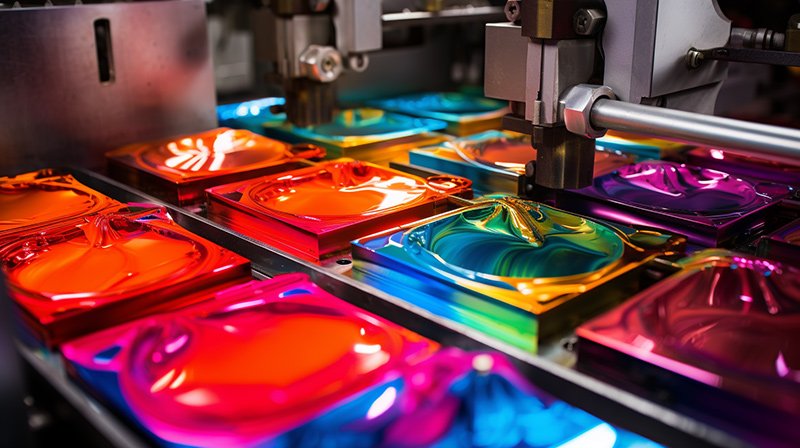
- This treatment also allows for various color options for aluminum screws, such as black, blue, red, and gold.
2. Zinc Plating
- A layer of zinc is plated onto the aluminum screw to boost its corrosion resistance.
- Commonly used for screws exposed to harsh environments.
3. Chrome Plating
- Provides a smooth and wear-resistant surface, improving the appearance and corrosion resistance of the aluminum screw.
4. Nickel Plating
- Forms a uniform layer of nickel on the screw, enhancing its corrosion and wear resistance.
5. Coating (e.g., Polyester, Polyurethane, Epoxy Resin)
- Offers various colors and appearance effects for aluminum screws.
- Increases corrosion resistance and UV protection.
6. Phosphating
- Forms a layer of phosphate film on the surface of the screw, enhancing paint adhesion and corrosion resistance.
7. Transfer Printing
- Provides a variety of patterns and colors for the screws, typically used for special decorative and identification requirements.
8. Passivation
- A chemical process that forms a stable oxide layer, enhancing the corrosion resistance of the aluminum screw.
These surface treatment methods can be used individually or in combination to meet different performance and appearance requirements. Proper selection and application of these methods can significantly improve the performance and lifespan of aluminum screws in specific environments and applications.
Differences Between Aluminum Screws and Screws of Other Materials
Weight: As mentioned earlier, aluminum is lighter than many other metals, making aluminum screws the top choice where reducing structural weight is concerned.
Strength: The strength of aluminum typically doesn’t match that of steel or titanium, but with alloying and heat treatment, its strength can be enhanced.
Cost: While pure aluminum is relatively cheaper, high-strength aluminum alloys might be more expensive.
Heat Resistance: Aluminum has a lower melting point than steel, so its stability in high-temperature environments needs to be considered.
Aluminum VS Steel: Steel screws typically excel in strength compared to aluminum screws, but they are heavier and may rust. On the other hand, aluminum screws are lightweight and rust-resistant, but they might not be suitable for certain high-strength applications.
Aluminum VS Stainless Steel: Stainless steel screws have outstanding corrosion resistance, but they are usually heavier than aluminum screws. The cost between the two may differ, depending on the specific application and market conditions.
Considerations in Design and Selection:
Thread Type: Aluminum screws can come in various thread types, such as coarse or fine threads. The choice depends on the specific application.
Head Shape: There are various head shapes to choose from, such as round, flat, countersunk, etc. This typically depends on how the screw is to be installed and the aesthetic requirements.
Drive Type: Aluminum screws can be designed with various drive types, like slot, cross slot, hexagonal, etc. This influences the type of tool used during installation.
How to Choose the Right Aluminum Profile Screw
Consider the following factors when selecting aluminum profile screws:
Application Environment: For situations requiring lightweight and corrosion-resistance, such as aviation or coastal construction, aluminum screws are an ideal choice.
Strength Requirement: If higher structural strength is needed, consider choosing high-strength aluminum alloy screws.
Screw Specifications: Choose the appropriate screw length and diameter based on the size and shape of the connecting components.
Cost: Although aluminum screws are generally reasonably priced, those with high strength or special treatments might be more expensive.
Although aluminum screws have good compatibility with most materials, care needs to be taken when combining them with certain metals to avoid galvanic corrosion. Combining them with copper is a common example, where isolation measures, such as using insulating washers, should be adopted.
Common Applications of Aluminum Screws
Aluminum screws are widely used due to their lightweight, corrosion resistance, and good mechanical properties. Below are the common application areas and specific products for aluminum screws:
1. Aerospace:
- Fixing aircraft frames, wings, seats, and other internal components.
- Structural components of spacecraft and satellites.
2. Automotive Manufacturing:
- Component fixation for lightweight and high-performance vehicles, such as body panels, doors, engine covers, and other external structures.
- Battery fixation and connections in electric vehicles.
3. Electronics:
- Used for fixing casings, heat sinks, battery covers, etc., in electronic devices.
- Examples include the assembly of mobile phones, computers, flat-screen TVs, and other devices.
4. Bicycle Manufacturing:
- Used for fixing bicycle frames, seats, handles, and other components.
5. Medical Equipment:
- Assembly of lightweight portable medical devices and tools, such as wheelchairs, bed frames, etc.
6. Renewable Energy:
- Installation and fixation of solar panels.
- Fixation of components in wind power equipment.
Specific product examples:
- Aerospace-specific aluminum screws that meet certain strength and corrosion resistance requirements.
- Micro aluminum screws in electronics used to fix tiny components.

Market Trends for Aluminum Screws
With the advancement of technology and the growing demand for lightweight materials, the market outlook for aluminum profile screws appears very optimistic.
Green Manufacturing: Aluminum is recyclable, and compared to other metals, its production process has a lesser impact on the environment. This has led to an increasingly significant position for aluminum screws in eco-friendly manufacturing.
Electric Vehicles: Due to the stringent lightweighting requirements of electric vehicles, the application of aluminum screws in this domain is expected to see a substantial increase.
Construction Industry: Owing to the corrosion resistance of aluminum screws, they are also popular in the construction sector, especially in coastal areas or environments with high salinity.
Conclusion
The standing of aluminum screws in the global hardware industry is continuously ascending. Owing to their unique combination of attributes—lightweight, corrosion-resistant, and conductivity—they have been broadly implemented across various sectors. With technological advancements and shifts in market demands, aluminum screws will undoubtedly continue to play a pivotal role and offer opportunities for future innovations. FINEX recognize the significance of high-quality fastening solutions in today’s diverse industries. Leveraging the unique properties of aluminum – lightweight, corrosion-resistant, and mechanically robust – we have positioned ourselves at the forefront of delivering innovative fastening products. If you want to find a professional fastener partner, please feel free to contact us