


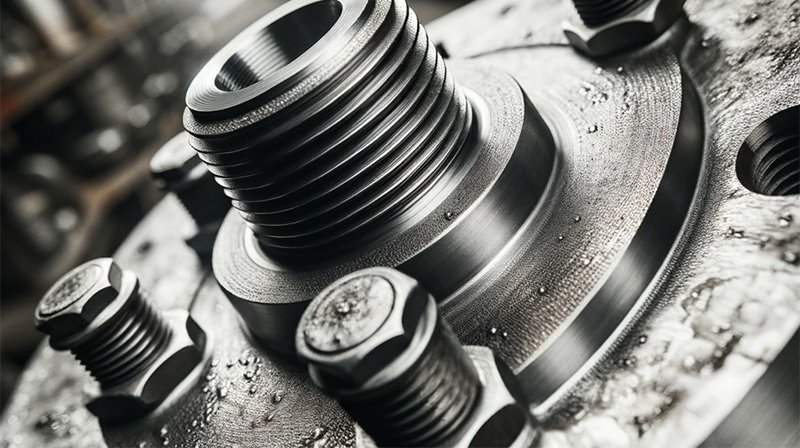
When we mention bolts, most people probably think first of the traditional hex bolt. But with the advancement of technology, the Hex Flange Bolt (hexagonal bolt with a flange) has gradually become favored in the industrial field. So, what exactly is a Hex Flange Bolt, and how do you make the right choice? Let’s delve into it.
Introduction to Hex Flange Bolt
The Hex Flange Bolt is a specially designed bolt that not only has a hexagonal shape at its head but also comes with an extended flange section. The primary purpose of this flange is to provide the bolt with a larger bearing area during fastening, reducing surface pressure and preventing damage to parts.
Features of Hex Flange Bolt
Integrated Flange Design: Compared to the traditional hex bolt, the Hex Flange Bolt features an integrated flange, helping to offer a larger bearing surface. This helps in dispersing stress and reducing damage to installation materials.
Self-Locking Design: Many Hex Flange Bolts come with a serrated design at the base of the flange, which aids in preventing the bolt from loosening on its own in vibrational settings.
Corrosion Resistant: Depending on its manufacturing material and surface treatment, the Hex Flange Bolt typically showcases good corrosion resistance, making it suitable for various environments.
High Torque Tolerance: Due to its flange design, this bolt can withstand higher torques, ensuring the tightness of the fastener.
Simplified Assembly: With its integrated flange design, there’s no need for additional washers or spacers, streamlining the assembly process.
Classification of Hex Flange Bolt
By Flange Type:
- Smooth Flange: Suitable for applications needing a flat contact surface.
- Serrated Flange: Ideal for applications requiring additional anti-slip and self-locking capabilities.
By Thread Type:
- Coarse Thread: Offers quick assembly but might not be as robust as fine threads.
- Fine Thread: Provides a stronger connection, though assembly might be slightly slower.

Why Choose Hex Flange Bolt?
The Hex Flange Bolt has excelled in multiple industries and applications, attributed to its various design advantages. When considering fasteners for your project, here are the key reasons you should contemplate using a Hex Flange Bolt:
Increased Bearing Area:
- Stress Distribution: Owing to its flange, this bolt provides a larger contact area during installation, helping to more evenly distribute the stress caused by fastening.
- Material Protection: The extended bearing area better safeguards fastening materials, reducing damage or deformation from over-tightening.
Reduced Assembly Time:
- No Need for Extra Parts: With the integrated flange in the Hex Flange Bolt, there’s no need to add separate washers for each connection.
- Streamlined Process: Time wasted in selecting and matching washers is reduced, improving assembly efficiency.
Prevents Loosening:
- Enhanced Vibration Resistance: The design of the Hex Flange Bolt makes it more stable when subjected to common vibrations and shocks.
- Flange Shape: Compared to the regular hex bolt, the flanged design aids in providing a greater torque resistance, ensuring the connection remains tight.
Increased Safety:
- Sturdier Connection: Owing to the above features, the Hex Flange Bolt offers a more reliable and longer-lasting connection, reducing risks due to bolt loosening or damage.
- Better Load Distribution: The extended flange ensures the load is more evenly distributed across the entire surface of the connection during fastening.
How to Choose the Appropriate Hex Flange Bolt?
Material Selection: The material choice of the Hex Flange Bolt profoundly impacts its performance, durability, and areas of application. Below is an introduction to commonly used materials for Hex Flange Bolts, along with the characteristics and suitable applications for each material.
- Carbon Steel
- Characteristics: Carbon steel is the most frequently used material for Hex Flange Bolts. Its strength can be adjusted by varying the carbon content and undergoing heat treatments.
- Applications: Used widely across various applications, ranging from construction to machinery equipment.
- Coating: To enhance its corrosion resistance, carbon steel bolts often undergo galvanization, either through electroplating or hot-dipping.
- Stainless Steel
- Characteristics: Offers outstanding corrosion and oxidation resistance without the need for an additional coating.
- Applications: Suitable for food processing, pharmaceuticals, chemical industries, and other applications demanding corrosion resistance.
- Common Types: Examples include 304 and 316. Among them, 316 stainless steel, due to its molybdenum content, has superior corrosion resistance, especially against chlorine.
- Alloy Steel
- Characteristics: Steel containing other elements like manganese, silicon, nickel, and chromium, offering higher strength, hardness, and fatigue performance.
- Applications: Used in scenarios demanding higher strength and wear resistance, such as in heavy industries or mechanical engineering.
- Treatment: These bolts might undergo surface treatments or coatings to offer additional corrosion resistance.
- Aluminum
- Characteristics: Lightweight with decent corrosion resistance but has lower strength.
- Applications: Mainly for applications requiring lightweight, antioxidative, or non-magnetic properties.
- Titanium
- Characteristics: Features high strength, lightweight, and excellent corrosion resistance.
- Applications: Aerospace, medical equipment, and high-performance sports equipment.
- Brass
- Characteristics: Provides good electrical conductivity and corrosion resistance, but with lesser strength.
- Applications: Electrical applications, decorative items, or areas that don’t demand high strength but require corrosion resistance.
- Copper
- Characteristics: Similar to brass but with better electrical conductivity.
- Applications: Electrical applications or situations demanding electrical conductivity.
Coatings and Treatments:In conclusion, when choosing a Hex Flange Bolt, one should consider the specific requirements of the application, such as environmental conditions, load-bearing needs, and any special criteria like electrical conductivity or aesthetics.
The coatings and treatments of Hex Flange Bolts are intended to enhance the bolt’s performance, corrosion resistance, and appearance. Different coatings and treatments influence the bolt’s attributes differently, making the choice of the appropriate one crucial. Here’s a guide on how to select the right coating and treatment:
- Consider the Application Environment
- Moist or Saline Environments: In such settings, anti-corrosion coatings like hot-dip galvanizing or galvanizing are the best choices.
- High-Temperature Settings: Opt for coatings that remain stable at high temperatures, like ceramic coatings or phosphate treatments.
- Chemical Exposure: If the bolt will be exposed to certain chemicals, choose a coating with specific chemical resistance.
- Consider Installation and Dismantling NeedsSome coatings might increase friction or make the bolt hard to dismantle. For instance, if frequent disassembly is required, consider using anti-adhesive coatings or lubricating treatments.
- Consider Appearance RequirementsIf the bolt’s appearance is critical (e.g., in decorative applications), then nickel, chrome, or other decorative coatings might be the ideal choice.
- Consider CostDifferent coatings and treatments come at varying costs. Choose the most cost-effective coating considering the budget and required performance.
Common Coatings and Treatments:
- Galvanizing
- Features: Offers basic corrosion protection.
- Applications: External use, structural engineering, moist environments.
- Hot-dip Galvanizing
- Features: Provides enhanced corrosion resistance.
- Applications: More stringent external applications like bridges, marine structures.
- Nickel/Chrome Plating
- Features: Offers a shiny appearance and good corrosion resistance.
- Applications: Decorative uses or products requiring a polished look.
- Phosphating
- Features: Enhances coating adhesion and provides some level of corrosion resistance.
- Applications: Used as a base for paints or other coatings.

Application Considerations
When it comes to using Hex Flange Bolts, it’s essential to ensure they are applied correctly, safely, and effectively. Here are some extended application considerations when using Hex Flange Bolts:
- Ensure Proper Installation Torque: Each specification and size of Hex Flange Bolt has a recommended torque range. Install within this range to avoid over-tightening and to ensure the bolt provides adequate clamping force.
- Choose the Right Tools: Use the appropriate wrench or socket tool to tighten Hex Flange Bolts. Avoid mismatched tools, as they might damage the bolt head or not provide even torque.
- Avoid Overloading: Do not exceed the recommended load limit of the Hex Flange Bolt. This could lead to premature fatigue or breaking of the bolt.
- Consider Environmental Factors: In specific environments (e.g., high temperatures, moisture, chemical exposure), select the proper materials and coatings to enhance the bolt’s durability.
- Regularly Inspect and Maintain: Check Hex Flange Bolts regularly to ensure they remain in good working condition. Look for signs of damage, corrosion, or wear and replace as necessary.
- Understand the Bolt’s Fatigue Performance: In applications with repetitive loading and unloading, ensure the bolt can withstand the anticipated fatigue cycles.
- Handle and Store Properly: Avoid exposing the bolts to harmful chemicals or environments, and store them in a dry, cool place to prevent any unnecessary corrosion or damage.
- Use Suitable Lubricants: Where necessary, using the right lubricant ensures smooth bolt installation, reduces friction, and prevents seizing.
- Consider Thermal Expansion: In high-temperature applications, materials might expand. Ensure bolts have enough leeway to accommodate temperature changes to avoid excessive stress.
- Avoid Using Damaged or Deformed Bolts: If bolts show any signs of cracks, deformation, or other evident damage, they should not be used.
Conclusion:
As a professional hardware fastener manufacturing company, FINEX deeply understands the importance and characteristics of Hex Flange Bolts in various applications. We not only focus on the high quality and precise specifications of our products but have also conducted in-depth research into the materials, coatings, and treatment methods of bolts to ensure their optimal performance under various conditions and environments. Our expertise guarantees that every Hex Flange Bolt delivers outstanding fastening results, whether in high-temperature, humid, or chemically exposed settings. Additionally, we offer our customers expert guidance on how to select and use Hex Flange Bolts correctly, ensuring they achieve the best outcomes in all applications. Choosing FINEX means choosing professionalism, quality, and reliability.